The two standards
Roof work follows the Infraspection Institute Standard for Infrared Inspection of Insulated Roofs (2022 edition). Walls, windows, ceilings and attics follow the Infraspection Institute Standard for Infrared Inspection of Building Envelopes (2022 edition). Infraspection has published infrared inspection standards since 1988, and portions of its guidelines have been incorporated into ASTM documents.
Each standard sets the same four things: who does what, what the equipment must be able to do, what conditions the survey needs, and what the report must contain. Our survey tool checks every one of those items before it will print the sentence "performed and documented to the Standard".
A roof moisture survey, start to finish
Roles agreed in writing
The end user (you or your facilities manager), the thermographer and a qualified assistant who knows the roof. The roofer who will take the cores is named before the survey night.
The right night
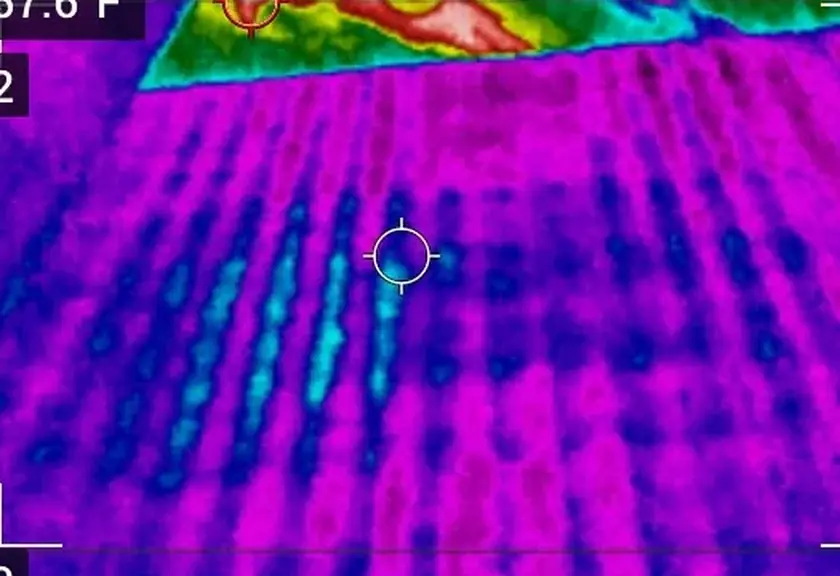
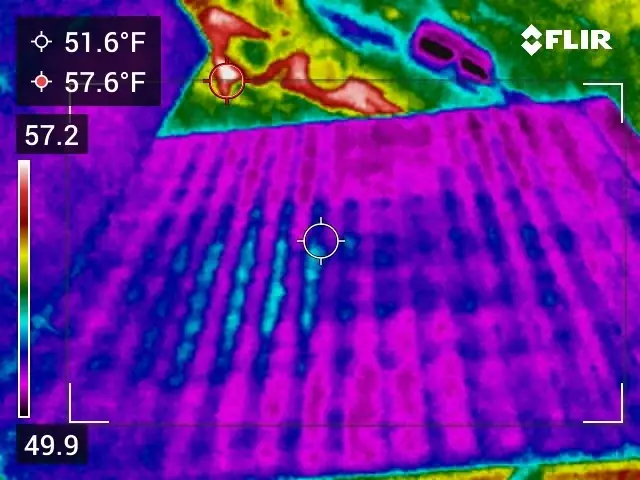
A sunny day, then a clear night with light wind and a dry membrane. Wet insulation holds the day's heat longer than dry insulation, so it reads warm after dark. If the weather doesn't cooperate, we reschedule at no charge rather than survey in conditions the standard rules out.
Walked in lanes, viewed at an angle above 20 degrees
Every roof section is covered on foot with a radiometric handheld imager, with an aerial pass where it helps on a large roof. Each suspect area is confirmed with the handheld before it is marked.
Marked on the roof and on the plan
Each area is outlined in paint, numbered, measured, and recorded on the roof drawing with a thermal image and a visible-light photo of the same spot.
Findings map the next business day
You get the numbered areas, their sizes, the percentage of each section affected, and a minimum core plan for your roofer: dry reference cores plus one core inside each marked area.
Your roofer cores
Coring, patching and anything that touches the roof warranty belong to the roofing contractor: yours, or one we bring. The core results go into the final report; a thermal pattern is not called wet until a core says so.
The final report
Every item the standard requires: thermographer and credential, equipment and its specifications, weather history, survey window and conditions, procedures, each finding with paired images, the verification results, and the limitations. If any required item is missing, the report is stamped DRAFT and the compliance sentence is withheld. We don't ship DRAFT reports.
Re-scan after the repair
The repaired areas are scanned again under the same kind of conditions, so the owner has a dated before-and-after record, not a promise.
Equipment that meets the standard
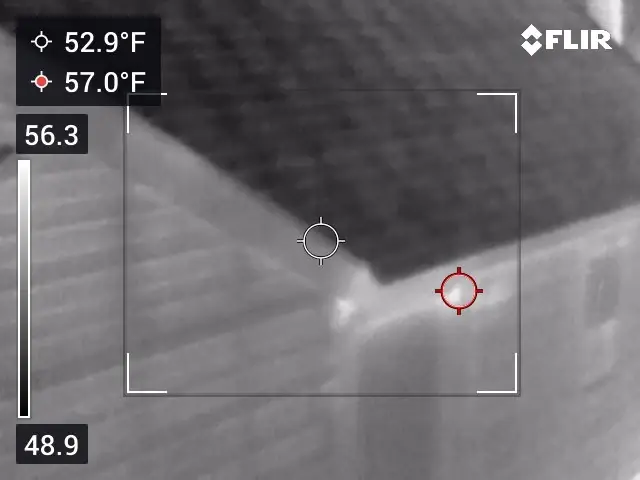
The standards require an imager with real-time imaging and manual level and span controls that can be set to temperature values; automatic-only imagers don't qualify. Our handheld instrument of record is a FLIR C8 radiometric imager with traceable factory calibration. Aerial thermal is used for screening large roofs; it is not the instrument of record unless it is radiometric.
Level I thermography is qualitative: we locate and document thermal patterns and confirm them by independent means. We don't state surface temperatures as findings, rate the building, or design the repair.
Building envelope surveys
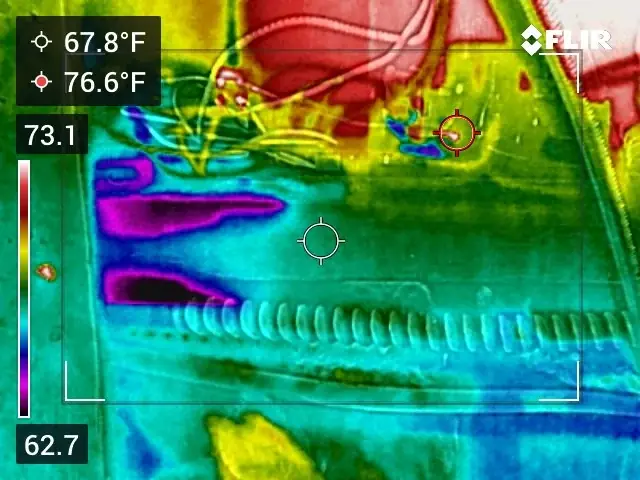
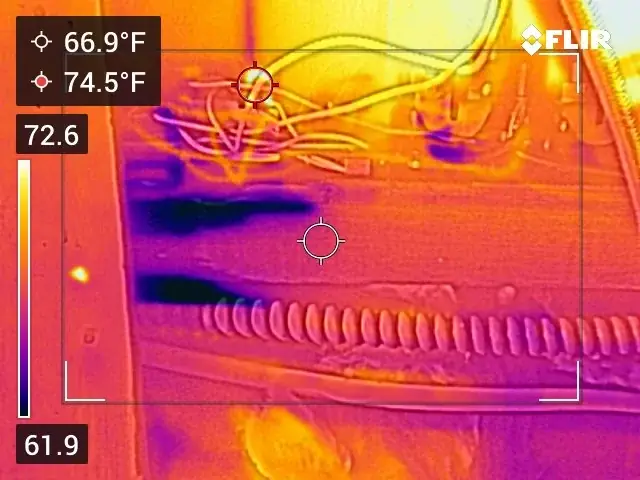
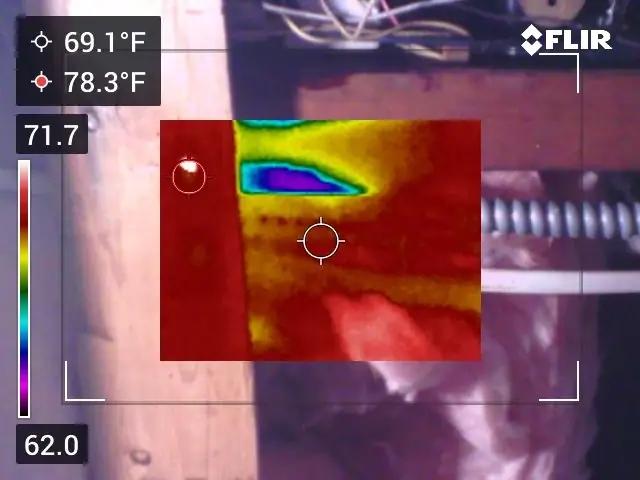
Walls, windows, doors, ceilings and attics are surveyed from inside and outside with the heat running and an inside-to-outside temperature difference of at least 18°F held for several hours beforehand. Surfaces must be dry. Each finding is classed as conductive (insulation missing, settled or wet), convective (air leakage) or suspected moisture, and moisture is confirmed with a pin-type moisture meter before it is reported.
Air leakage is assessed under the building's existing pressure, with the conditions recorded. Pressurized (blower door) testing is referred to an energy auditor.
Scan or survey?
An Investigative Moisture Scan answers "is it wet, and where?" with the same imager and the same thermographer, but it is not performed to a standard and the report says so. It is the right product when the owner needs to know where to send the contractor. A survey to the standard is the right product for insurance, warranty, disputes, public and union work, and quality assurance of new construction, because it can be held up by someone who wasn't there.
A scan steps up to a survey when the owner needs it to. What never changes: the same conditions rules, the same confirmation rule, and the same hash-logged record described on the provenance page.
What confirmation looks like
Common questions
What makes a thermal survey "to the standard"?
Who takes the core samples?
Can you do the survey tonight?
What is the difference between a Moisture Scan and a survey?
Related services
Infrared roof moisture surveys
Find wet insulation under flat and low-slope roofs so you repair the wet section, not the whole roof.
Explore →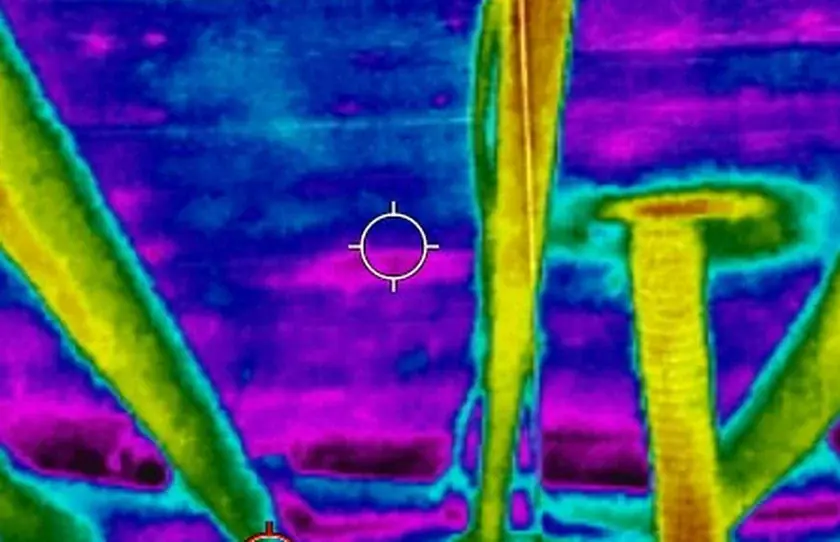
Building envelope survey
A complete infrared survey of walls, windows, doors, ceilings and floors, documented for insurance, warranty and public work.
Explore →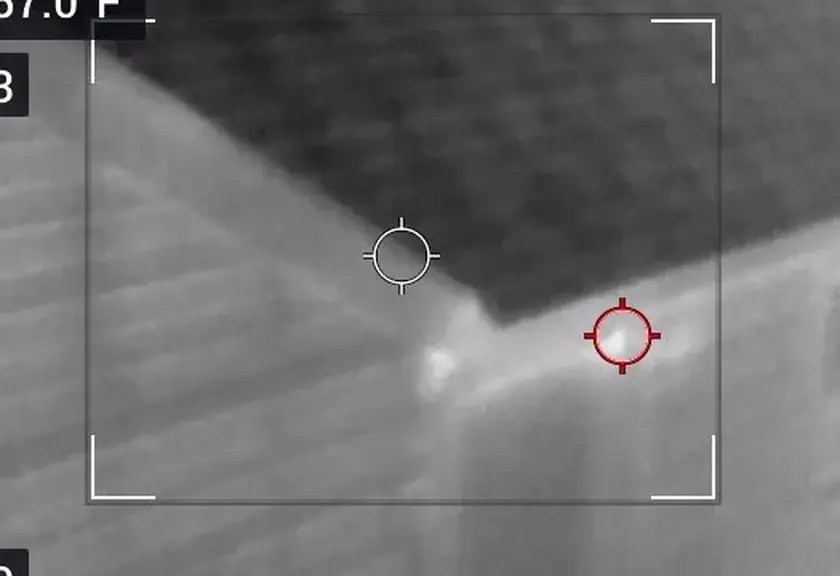
Moisture scan for ice dams & drafts
A thermal scan of the roof, eaves and inside that shows where heat escapes and where moisture is likely.
Explore →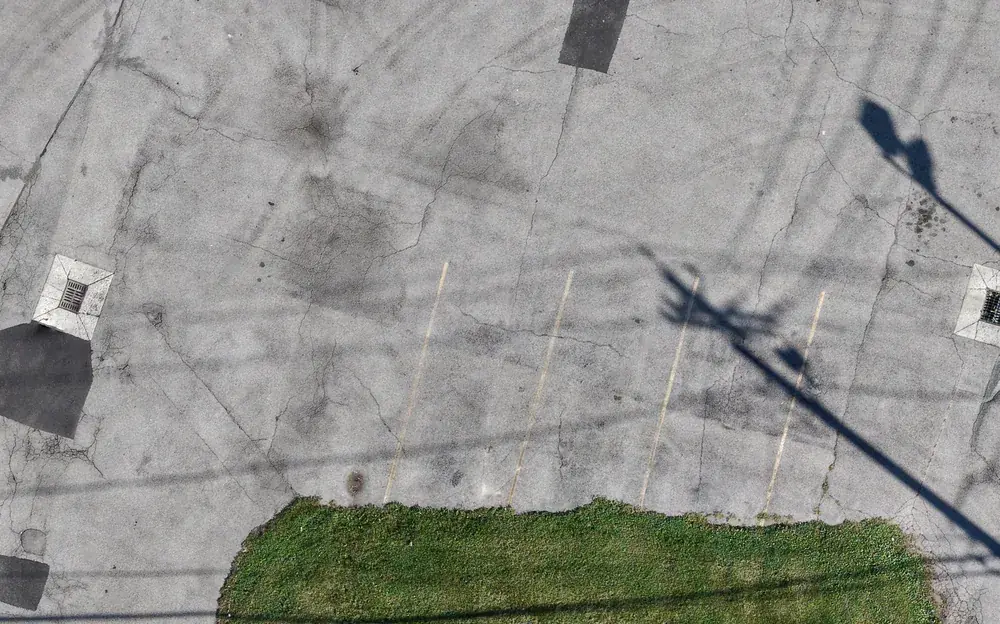
What's in the record
A method register, a provenance record and a SHA-256 hash log for every delivered document. If it is ever questioned, it can be checked.
Explore →Where we fly
Based in Irondequoit and serving Rochester and Monroe, Wayne, Ontario, Livingston, Orleans and Genesee Counties, including Irondequoit, Webster, Penfield, Fairport, Pittsford, Brighton, Henrietta, Greece, Gates, Chili, Hilton, Spencerport, Victor, Canandaigua, Brockport, Honeoye Falls, Sodus, Williamson, Geneseo, Batavia and Albion. Travel beyond 25 miles of Rochester is $0.75 per mile. FAA airspace authorization near Greater Rochester International is filed by us at no charge.